Most international travelers passing through Germany have never heard of Hamm — and even fewer would think to stop there. Yet this mid-sized city in North Rhine-Westphalia is currently home to one of the most significant renewable energy construction projects in the entire region, and it is quietly reinforcing a reputation that has been building for years: Hamm is becoming one of Germany’s most strategically important energy and logistics hubs.
For business travelers, sustainability-focused investors, and curious explorers piecing together a Germany itinerary, understanding what is happening in Hamm right now — and how the city fits into the country’s broader energy transition — adds a layer of context that most standard travel guides never cover.
The Project: Germany’s RAG Builds a Record-Breaking Solar Plant in Hamm
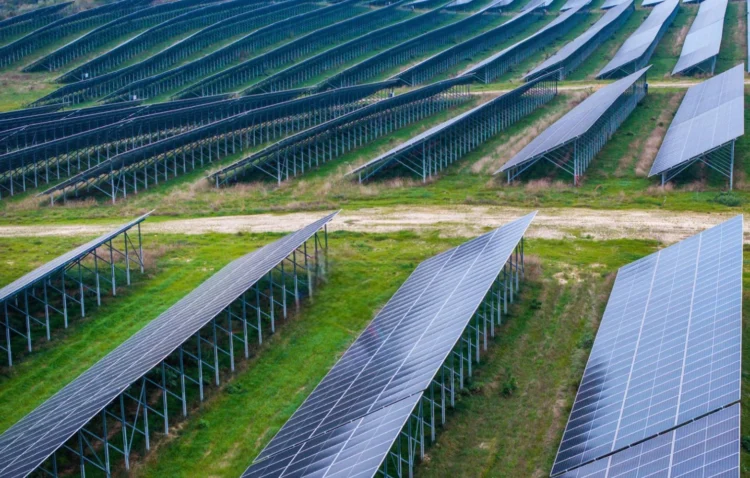
RAG, the German company historically associated with coal mining and now repositioning itself as a renewable energy and land-management operator, is constructing what is set to become the largest open-field photovoltaic plant in Hamm — and likely one of the largest of its kind in the wider region.
The plant, named “Hamm Sandbochumer Straße” after its location, will be built across two adjoining plots totaling 5.2 hectares, positioned near the Sundern spoil heap and a double-track railway line on the Pelkum side of the city, with the electricity output destined for nearby Bergkamen.
The Scale of the Installation
The numbers behind this project are genuinely substantial for a single ground-mounted solar installation:
- Installed capacity: 5.97 megawatts peak
- Number of solar modules: approximately 8,500
- Expected annual electricity generation: around 5,200 megawatt hours (5.2 million kilowatt hours)
- Land area: 5.2 hectares
- Investment: in the mid-single-digit million euro range
To put that generation figure into everyday terms: 5,200 megawatt hours is enough to supply approximately 1,500 to 2,000 average private German households with electricity for a full year. For a single ground-mounted installation on just over five hectares of land, that is a meaningful contribution to the regional energy supply.
Where the Power Actually Goes
Despite being built in Hamm, the electricity generated at Sandbochumer Straße will not primarily power Hamm households. Instead, it is destined for Bergkamen, where the majority of RAG’s electricity demand is concentrated around water management operations at the Haus Aden site — particularly for running the pumps that are essential to managing groundwater levels in a region with a long legacy of coal mining.
RAG spokesperson Wiebke Büsch explained the company’s approach directly: “We feed it into existing grids and draw it for our own consumption.” This is not a public utility project designed to sell electricity to consumers on the open market — it is a corporate self-supply initiative, designed to decarbonise RAG’s own substantial energy footprint.
Why RAG Is Investing in Solar
RAG’s involvement in renewable energy is part of a broader and deliberate corporate transformation. As a central aspect of its sustainability strategy, the company is pursuing CO2 neutrality across the electricity supply for its operational sites — a particularly significant goal for an organisation whose institutional history is rooted in coal extraction.
Crucially, the choice of location reflects a pragmatic land-use strategy rather than proximity-driven convenience. According to RAG, suitable sites are not always readily available near the points of consumption. “In these cases, we implement renewable energy projects on our own land near the water management facilities,” the company stated. RAG already owns land near sites like Sandbochumer Straße as a legacy of its mining operations — land that is now finding a second purpose in the renewable energy transition.
A recent German legal reform — the law on the immediate improvement of the framework for renewable energies in urban planning law — has materially accelerated this kind of development. The law permits the construction of ground-mounted photovoltaic systems without a formal development plan when sited along highways and double-track railway lines, exactly the conditions present at the Sandbochumer Straße location. RAG has identified several sites across the region meeting these criteria, with Hamm being one of the first to move into active construction.
Sustainability Design: More Than Just Solar Panels
One of the more striking aspects of the Hamm project is the attention given to ecological design alongside the core energy infrastructure.
The solar modules will be mounted on removable screw or driven foundations — a construction method specifically chosen to avoid permanent soil sealing. This means that, unlike a conventional building foundation, the installation can theoretically be removed in the future with the underlying land returned to a more natural state.
The site will be surrounded by a hedge, which serves a dual purpose: providing visual privacy from neighbouring areas while functioning as an ecologically valuable habitat corridor for insects and small animals. Animal-friendly fencing has also been specified, designed to allow small mammals and amphibians to pass through the site rather than being permanently excluded from their existing habitat range.
As RAG put it, “the PV system therefore fulfills the ecological and economic aspects of RAG’s sustainability strategy” — a framing that positions the project not merely as an energy asset but as a demonstration of how industrial land reuse and ecological stewardship can coexist.
Beyond the panels themselves, the site will include an inverter station and a grid connection transfer station — both described as barely larger than a garden shed, a detail that underscores just how much of the site’s footprint is dedicated to the solar array itself rather than supporting infrastructure.
Timeline and Local Impact
The building permit for the Hamm Sandbochumer Straße plant has already been granted, with RAG targeting a tentative construction start in late 2026 or early 2027. The construction phase itself is expected to take several months, with preliminary soil investigations planned ahead of the main build.
For residents and nearby businesses, the practical disruption is expected to be minimal. RAG has stated that the project requires no extensive excavation work, meaning increased construction traffic is not anticipated. Some short-term noise disturbance during construction cannot be ruled out, and a decision on whether adjacent pedestrian and cycling paths will need temporary closure is still pending, with the construction site setup plan currently being finalised.
Specific contact details for the project will be announced well ahead of the construction start date, though interested residents and businesses can already direct questions to RAG’s energy department via erneuerbare@rag.de.
Hamm’s Bigger Picture: More Solar Plants on the Way
The Sandbochumer Straße installation is not an isolated initiative. RAG has confirmed plans for four additional open-field photovoltaic plants, all located near other water management sites across the region — suggesting that the Hamm project is effectively a template the company intends to replicate at scale.
Hamm already has at least one other approved ground-mounted photovoltaic system, located on Römerstraße, according to city spokesperson Tom Herberg. Separately, the city’s public utilities had previously explored — and have since abandoned — plans for a similar installation on a former landfill site at Martinstraße/Auf der Becke, illustrating that solar development in Hamm is an active and evolving area of municipal and corporate planning, not a single one-off project.
Why Hamm Matters Beyond This One Project
Hamm’s emergence as a site for significant renewable energy investment fits into a broader pattern that makes the city more strategically interesting than its modest profile on most travel itineraries would suggest.
Hamm sits at a genuinely important transport crossroads. The city is positioned between the A1 and A2 motorways, two of Germany’s most significant arterial highways, and Hamm’s main railway station — Hamm (Westfalen) Hauptbahnhof — is a major hub on the German rail network, with lines connecting toward Dortmund, Münster, Hagen, Warburg, and the Minden corridor. The station has operated since 1847 and remains a structurally important interchange point for both regional and long-distance rail services operated by Deutsche Bahn, Eurobahn, and National Express Germany.
This connectivity is precisely why Hamm has attracted broader energy sector interest beyond the RAG solar project. The city has positioned itself as part of a wider regional hydrogen economy initiative in North Rhine-Westphalia, with local utility company Stadtwerke Hamm involved in hydrogen generation projects intended to support the decarbonisation of regional public transport and industry. Hamm’s Mayor has explicitly framed the city’s approach to Germany’s coal phase-out as an opportunity rather than merely a challenge — language that mirrors the same transformation narrative now visible in the RAG solar project.
North Rhine-Westphalia as a whole continues to attract substantial renewable energy and industrial transition investment, supported by economic development bodies like NRW.INVEST, which actively works to bring international capital and businesses into the state. Hamm’s position within this broader regional energy transformation — alongside projects like the Rheinisches Revier transition zone backed by a €14.8 billion public transition budget — situates the city as a genuinely relevant data point for anyone tracking Germany’s industrial decarbonisation story.
Hamm for Business Travelers and Curious Explorers
For business travelers with interests in renewable energy, industrial land reuse, or Germany’s broader Energiewende (energy transition), Hamm offers a genuinely instructive case study that few cities of its size can match. A short visit to the region — perhaps combined with a stop at Hamm’s historic railway station or a look at the Sundern spoil heap area where the new solar plant is being constructed — provides tangible, on-the-ground context for a transition story that is often discussed only in abstract policy terms elsewhere.
Hamm’s rail connectivity also makes it a genuinely practical stop for travelers building a broader Germany itinerary. The city’s position on key regional rail corridors means it can be incorporated relatively easily into trips that also include Germany’s capital, Berlin — a city whose role, history, and practicalities are explored in detail in the comprehensive guide to Berlin as the capital of Germany, covering everything from currency and time zones to the essentials every visitor needs.
For travelers approaching Germany from the Netherlands — a common routing for those exploring Western Europe’s rail network — the comparison of flying versus taking the train between Amsterdam and Berlin is essential reading before finalising transport plans, and many of the same regional rail corridors that connect Amsterdam to Berlin pass through or near North Rhine-Westphalia, making a Hamm detour entirely feasible for travelers with flexible itineraries.
Those mapping out a longer European itinerary may also find value in the detailed two-week itinerary from Amsterdam to Lucerne, Berlin, and Warsaw, which illustrates how a business or leisure traveler might structure a multi-city Central European trip that could readily accommodate a stop in an emerging energy hub like Hamm along the way.
For travelers curious about how Germany’s energy capital compares with its political capital, the analysis of the contrasts between Amsterdam and Berlin offers useful comparative framing — and the same lens can be applied to understanding how a working industrial city like Hamm differs sharply from Germany’s tourist-heavy capital, despite being only a few hours apart by train.
Travelers who prefer overnight rail options between major hubs should also consult the guide on whether a night train exists between Amsterdam and Berlin, since overnight rail options can make it considerably easier to combine a stop in North Rhine-Westphalia with onward travel to Germany’s capital without losing a full travel day.
And for those who only have a single day to spare in Berlin after exploring Germany’s industrial heartland, the practical one-day Berlin itinerary guide ensures that even a short stopover in the capital delivers maximum value before continuing the journey.
What This Means for Germany’s Energy Future
The Hamm solar project, taken on its own, is a meaningful but modest contribution to Germany’s overall renewable energy capacity. Taken as part of the broader pattern it represents — former coal and mining land being systematically repurposed for solar generation, corporate energy consumers building self-supply infrastructure to meet sustainability targets, and regional governments accelerating planning processes to enable exactly this kind of development — it becomes a genuinely useful microcosm of how Germany’s industrial regions are navigating the energy transition in practice.
RAG’s pivot from a company historically defined by coal extraction to one actively building solar infrastructure on its own legacy land is one of the more concrete examples of industrial transformation playing out at ground level, rather than in policy documents or corporate sustainability reports. For anyone trying to understand how Germany’s Energiewende is actually being implemented — site by site, hectare by hectare — Hamm’s Sandbochumer Straße project is a useful and tangible case study.
Key Facts: Hamm Solar Project at a Glance
| Location | Sandbochumer Straße, Pelkum, Hamm |
| Developer | RAG |
| Plant Name | Hamm Sandbochumer Straße |
| Installed Capacity | 5.97 MWp megawatts peak |
| Number of Solar Modules | ~8,500 |
| Land Area | 5.2 hectares |
| Annual Electricity Generation | ~5,200 MWh (5.2 million kWh) |
| Households Supplied (Equivalent) | 1,500–2,000 |
| Electricity Destination | Bergkamen (Haus Aden water management site) |
| Investment | Mid-single-digit million euro range |
| Construction Start | Tentative Late 2026 / early 2027 |
| Foundation Type | Removable screw/driven foundations (no permanent soil sealing) |
| Ecological Features | Hedge habitat corridor, animal-friendly fencing |
| Additional Planned Plants | 4 more near other RAG water management sites |
| Contact | erneuerbare@rag.de |