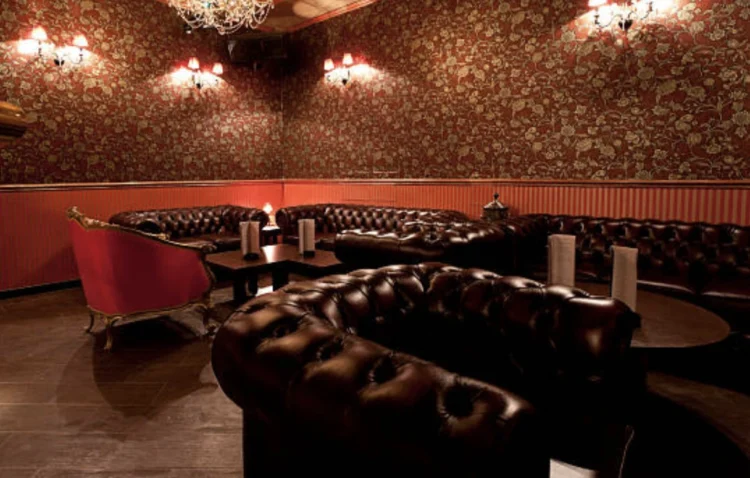
Inside The Sloane Club in London’s affluent Chelsea district, a hallway winds past a restaurant, a library, and a bar where six tasseled stools stand in formal arrangement beneath an oil painting of an opulently dressed woman from another era. The club opened in 1922, originally established to give women who had served during World War I a dignified space of their own — men were not admitted until roughly five decades later. Today, after a costly refurbishment, the century-old institution is chasing something else entirely: a younger membership willing to pay thousands of pounds a year, provided they can first pass an interview.
This scene, equal parts historic and thoroughly modern, captures the essence of one of the more curious business stories of 2026: private members clubs — exclusive establishments charging hefty annual fees for access to plush bars, restaurants, and curated amenities — are experiencing their biggest growth wave in decades, even as everyday hospitality venues across the same cities struggle to survive.
The Scale of the Boom
The numbers behind this trend are striking. “More clubs have opened in the last five years than the previous 30 years,” says Matt Hobbs, founder and chief executive of Copper Beech, a London-based advisory firm that consults for the private club industry. That is not a marginal uptick — it represents a fundamental acceleration in an industry that, for most of the twentieth century, expanded at a comparatively glacial pace.
London remains the spiritual birthplace of the private members club concept, with White’s Club — which opened its doors in 1693 — widely cited as the oldest such establishment in continuous operation. Precise figures are difficult to pin down because the industry has no centralized registry, but insiders estimate London is now home to more than 130 private clubs, the highest concentration in the world.
New York, while considerably smaller in absolute terms with only a few dozen clubs, has experienced an even more dramatic post-pandemic surge relative to its starting base. According to Hobbs, the city has added as many as 10 new clubs in just the past couple of years, including Maxime’s, Chez Margaux, and the British import The Twenty Two. Membership fees at clubs that have opened within the past five years typically range from roughly $3,000 to $15,000 annually, with many charging separate initiation fees ranging from $1,000 at the lower end to as much as $200,000 at the most exclusive tier.
What Membership Actually Costs
To put real numbers behind the trend, The Sloane Club’s current pricing illustrates the structure many clubs now use to attract younger members while preserving premium pricing for everyone else. Members under 35 pay a preferential annual rate of £1,700 (approximately $2,264), with a reduced joining fee of £450 (about $602). Members over 35 pay considerably more — at least £2,300 ($3,065) annually, plus a £950 ($1,271) joining fee.
This kind of age-tiered pricing has become increasingly common across the industry, reflecting a deliberate strategic effort by legacy clubs to widen their membership pipeline without abandoning the premium pricing that signals exclusivity to their existing base.
At the very top end of the market, the gap between entry-level and elite-tier clubs is enormous. New York’s CORE: Club, which attracts media, entertainment, and finance professionals, charges fees that can reach roughly $100,000 annually for its highest tiers, according to industry observers. Zero Bond, another prominent New York club, reportedly charges a $20,000 initiation fee plus $10,000 in annual dues. By contrast, Soho House — probably the best-known club brand globally — sits at a comparatively accessible $2,000 to $5,000 per year across most of its locations, a pricing strategy that has supported its expansion to 48 locations across 19 countries.
Why Now? The Pandemic Connection
Industry analysts consistently point to the COVID-19 pandemic as a pivotal accelerant for this growth wave, even though the trend has continued to build well beyond the initial reopening period.
Hobbs believes the pandemic fundamentally intensified people’s need for genuine social connection, pushing them toward private clubs as places to find what he describes as a “sense of belonging” within a “curated space for like-minded people.” After extended periods of isolation, the appeal of a dependable, familiar social environment — one where the same faces and the same level of service can be expected on every visit — appears to have resonated powerfully with affluent consumers rebuilding their social lives.
This demand has not gone unnoticed by real estate developers. Jamie Caring, a London-based hospitality industry consultant, describes a dramatic shift in his own business: where he might have received a couple of inquiries a month from prospective club operators back in 2019, he now fields roughly a dozen inquiries monthly. Some of that increase reflects his growing reputation, he acknowledges, but it primarily signals genuine acceleration in the broader luxury hospitality sector.
Caring explains that developers increasingly view private clubs as a strategic anchor tenant for larger multipurpose real estate developments that also include apartments, offices, and restaurants. A private club’s presence, in his view, elevates the cachet of an entire complex. “They’re thinking, ‘Well, clubs are the highest echelon of belonging,’” Caring says, framing the calculation developers make: how to add an element that increases a development’s prestige, its public relations value, and its overall desirability.
For investors specifically, the appeal is straightforward. High membership fees combined with long waitlists provide a reassuring signal that demand for a club will remain durable — a meaningfully different risk profile than a conventional restaurant or bar, which depends on continuously attracting new walk-in customers night after night.
The Other Side of the Story: Everyday Nightlife Is Struggling
The private club boom is occurring against a backdrop that makes its growth even more striking: conventional bars, pubs, and nightclubs in the same cities are under serious financial strain.
According to Britain’s Night Time Industries Association (NTIA), London has 16% fewer nightlife venues today than it did before the pandemic. Michael Kill, the NTIA’s chief executive, frames the divergence in stark economic terms: “These high-end environments are flourishing, because a lot of their customers are making really strong money,” he says, contrasting that with everyday consumers who “want to go to the pubs, bars, restaurants” but increasingly “just can’t afford it.”
Andrew Rigie, executive director of the New York City Hospitality Alliance, describes an almost identical dynamic across the Atlantic. “There are thousands upon thousands of neighborhood restaurants and pubs that are really struggling,” he says, pointing to a customer base that has become more price-sensitive even as the underlying cost of running a small hospitality business in New York continues to climb sharply.
The result is a hospitality sector increasingly bifurcated along income lines: a thriving, well-capitalized luxury tier serving customers with substantial discretionary income, sitting alongside a struggling mass-market tier serving customers whose budgets have been squeezed by broader cost-of-living pressures. Private members clubs are, in effect, one of the clearest visible symptoms of that broader economic divergence.
The Industry’s Image Makeover
Part of what has made the current boom possible is a deliberate, sustained effort by the industry to shed its historical reputation.
The traditional image of the private members club — smoke-filled rooms populated by men in tailored suits drinking brandy, immortalized in centuries of satirical sketches — gave way in more recent decades to a different but equally unflattering caricature: the hedonistic 1990s club scene typified by celebrities photographed stumbling out of London’s Groucho Club in the small hours. Neither image, industry analysts agree, has any place in the brand positioning clubs are pursuing in 2026.
Today’s clubs are pursuing something closer to wellness sanctuary than party den. Gyms, saunas, and spa facilities have become standard rather than exceptional additions. “We’re being more health conscious, and being more proactive about our wellbeing,” Caring explains. “These days, it’s increasingly become almost mandatory for social clubs to have wellness facilities.”
Even institutions with deep roots in the party scene have embraced this pivot. Tramp, the legendary 57-year-old London nightlife institution that built its reputation hosting rock stars, supermodels, and socialites through decades of hedonistic excess, recently opened a dedicated spinoff venue called Tramp Health. The new location offers members yoga and pilates classes alongside IV-drip therapy — which delivers vitamins, minerals, and antioxidants directly into a person’s bloodstream — and red light therapy, a treatment marketed for its purported anti-aging and skin benefits.
At The Sloane Club, member Andy Jordan exemplifies this new model of club usage. Jordan, the co-founder and creative director of clothing brand Jam Industries who first gained public recognition as a cast member on the reality television series “Made in Chelsea,” told CNN he uses the club’s on-site gym daily and often spends entire days there — exercising in the morning, hosting client meetings in the afternoon, and socializing into the evening. For members like Jordan, the modern private club functions less as an occasional indulgence and more as a genuine extension of daily life: gym, office, and social calendar rolled into a single membership.
Soho House: The Brand That Defines, and Complicates, the Category
No discussion of the modern private club boom is complete without addressing Soho House, the chain that has arguably done more than any other brand to define what a contemporary members club looks like — and which has, in the process, run directly into the central tension of the entire business model: scale versus exclusivity.
Founded in London in 1995 by Nick Jones, Soho House set out deliberately to differentiate itself from the stuffy, tradition-bound private clubs that had long dominated the London scene, instead courting creative professionals with a more relaxed, design-forward aesthetic. The brand expanded rapidly, opening a New York location in 2003 — a venue famously referenced in “Sex and the City,” when even the show’s most socially connected character, Samantha Jones, couldn’t successfully talk her way past the door.
That rapid growth eventually created its own problems. By 2024, demand had grown so intense — with membership reaching roughly 185,000 people and a waitlist of nearly 98,000 more — that Soho House paused new memberships entirely across its London, New York, and Los Angeles locations to address mounting complaints about overcrowding and declining service quality. Despite the pause in those three flagship markets, the company has continued expanding globally, growing to 48 locations across 19 countries, with newer growth concentrated in markets including São Paulo, Mexico City, and beyond.
The brand’s trajectory took an even more significant turn in 2025, when Soho House agreed to go private in a deal valued at approximately $2.7 billion — a move that returned the company to private ownership after a relatively brief period as a publicly traded entity. The transaction has prompted renewed debate among longtime members about whether the brand can maintain any meaningful sense of exclusivity at its current scale, a debate that goes to the heart of the tension every growing private club eventually faces: the qualities that initially make a club desirable — scarcity, curation, a genuine sense of community — become progressively harder to preserve as membership numbers climb into the hundreds of thousands.
Andy Jordan’s own experience captures this tension directly. Despite having visited Soho House locations, he told CNN he found the London branch too crowded and impersonal for his taste. “First time I went there, someone asked me for a picture. So I was, like, ‘No way am I coming back,’” he said — describing an experience that felt more like minor celebrity exposure than the discreet, club-like atmosphere he was seeking. The Sloane Club, by contrast, he said, offers an altogether different feel — smaller, quieter, and more genuinely clubby in the traditional sense.
What the Boom Says About Modern Luxury
Taken together, the current wave of private club growth reflects a broader recalibration of what luxury consumption looks like in the mid-2020s. The old model of conspicuous, transactional luxury — a single expensive purchase, displayed and then forgotten — has given ground to a model built around recurring access, curated community, and a sense of belonging that has to be continuously earned and renewed through annual membership.
Industry observers increasingly frame the most successful clubs not merely as venues selling access to an address, but as organizations selling access to relationships, privacy, and ongoing programming. For high-net-worth individuals in particular, privacy itself has become one of the most valuable currencies a club can offer — arguably more valuable, in some cases, than the physical amenities themselves.
This explains why the sector’s near-term trajectory looks set to bifurcate further. Clubs that can credibly deliver genuine community, careful member curation, and consistent quality of experience are positioned to continue thriving. Clubs that rely primarily on high price points and an expensive physical space — without the underlying substance of real community — are likely to find that an expensive facade is not, on its own, a durable competitive advantage.
Key Takeaways
- Private members clubs are experiencing their largest growth wave in decades, with more clubs opened in the last five years than in the previous 30
- London has more than 130 private clubs, the highest concentration globally; New York has added roughly 10 new clubs in the past two years alone
- Membership fees at newer clubs typically range from $3,000 to $15,000 annually, with initiation fees reaching as high as $200,000 at the most exclusive tier
- The pandemic is widely credited with accelerating demand, as people sought a renewed “sense of belonging” after prolonged isolation
- Real estate developers increasingly treat private clubs as a prestige-boosting anchor tenant within larger mixed-use developments
- The boom coincides with a sharp decline in everyday nightlife venues — London has 16% fewer nightlife venues since the pandemic — highlighting a widening income-based divide in urban hospitality
- Wellness facilities including gyms, spas, and recovery therapies have become standard features as clubs deliberately move away from their historically hedonistic image
- Soho House, the industry’s most recognizable global brand, illustrates the central tension of the category: a $2.7 billion privatization deal and continued global growth raise real questions about whether scale and genuine exclusivity can coexist