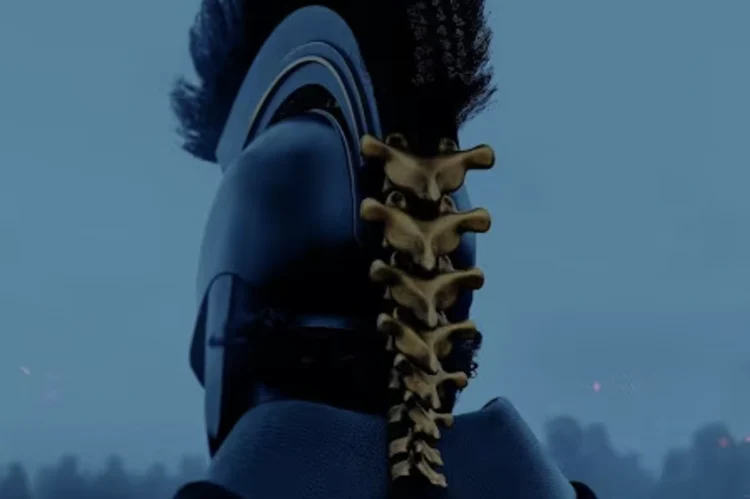
Three thousand years before anyone pitched a $250 million tentpole to a studio, an unnamed Greek poet built a story around a structural trick that still confuses screenwriting textbooks today: start near the end, flash back through the middle, and let your hero lie constantly to everyone he meets, including his own wife. Christopher Nolan’s The Odyssey, which opened on July 17, 2026, is the first film in history shot entirely on IMAX 70mm cameras, and it arrives with a $250 million budget, an ensemble cast led by Matt Damon, Tom Holland, and Anne Hathaway, and reviews that are, by most counts, the best of Nolan’s career.
What’s easy to miss amid the box-office numbers and format headlines is that the film’s warmest reception has focused less on spectacle than on structure — the same nonlinear, multi-thread storytelling that made Homer’s original poem a genuinely strange piece of ancient literature. Understanding why the 2,700-year-old source material still reads like a masterclass in narrative withholding helps explain why critics are calling Nolan’s adaptation his most successful film since Oppenheimer, and why a poem about a man who won’t stop lying keeps getting adapted by directors obsessed with unreliable perspective.
Background and Context
Homer’s Odyssey is not one continuous story told start to finish. It interweaves three separate threads: Odysseus’s ten-year struggle to sail home after the Trojan War, his son Telemachus’s parallel coming-of-age journey as he searches for news of his missing father, and a long flashback in which Odysseus himself narrates his most famous adventures — the Cyclops, the sirens, the witch Circe — to a foreign king partway through the poem. Homer doesn’t open with Troy’s fall or Odysseus’s shipwreck. He opens years later, with Odysseus already marooned on a remote island and his household in Ithaca being devoured by suitors who assume he’s dead.
This structural choice — starting in the middle of a crisis rather than at a chronological beginning — is now a standard screenwriting technique, but it was a genuine innovation in oral epic poetry. Equally unusual for its time: Odysseus is characterized as a serial liar. He fabricates a false backstory to strangers, disguises himself as a beggar in his own home, and tells an elaborate cover story to his wife Penelope before revealing his identity to her. Classicists have long noted that nothing in the poem actually confirms whether Odysseus’s own account of monsters and witches is true, since he’s the only witness to most of it. Nolan, a director who has built an entire career on unreliable narrators, nonlinear timelines, and withheld information (Memento, Inception, The Prestige), is adapting source material that arguably invented several of those tricks first.
Core Analysis
A Record-Breaking Opening Built on an Unusual Bet
Claim: Nolan’s decision to shoot the entire film on IMAX 70mm — a first for any feature — was a significant commercial and technical gamble that paid off at the box office.
Evidence: The Odyssey opened to approximately $120.5 million domestically over its first three days, a personal box-office record for Matt Damon, and a global opening in the range of $257 million, reportedly Nolan’s best worldwide launch to date. The film also broke records for IMAX ticket presales. Universal supported the release with an unconventional marketing rollout: a 70-second teaser shown only in theaters in mid-2025, followed by a six-minute extended trailer that played exclusively ahead of 70mm IMAX screenings starting in December 2025, well before any wide digital trailer release.
Interpretation: The theatrical-exclusive, format-first marketing strategy mirrors Nolan’s long-standing preference for theatrical spectacle over streaming or digital-first promotion, and the box office numbers suggest audiences responded to that scarcity and prestige positioning rather than being deterred by the lack of conventional trailer saturation.
Limitation: Opening-weekend numbers do not confirm long-term profitability against a reported $250 million production budget, before marketing costs; historically, IMAX-format epics can front-load box office through premium ticket pricing without necessarily indicating durable audience turnout in subsequent weeks.
Critical Reception and the Structural Gamble
Claim: The film’s structural fidelity to Homer’s nonlinear, multi-perspective format is a major factor in its unusually strong critical reception, even though that same structure has drawn some specific criticism.
Evidence: The Odyssey holds a critical score in the 95-98% range on Rotten Tomatoes’ “Certified Fresh” tier based on well over a hundred reviews, reportedly surpassing the 93% score of Nolan’s Oppenheimer, itself a Best Picture winner. At the same time, The Hollywood Reporter’s chief critic described the film as “a meditative action movie both immense and intimate, albeit one whose flow is impeded by the inherently episodic nature of the nonlinear source material and some questionable casting choices” — a review that praises the film while explicitly flagging the same structural choice as a minor drag on pacing.
Interpretation: Critics broadly rewarding a $250 million tentpole for leaning into a 2,700-year-old structural oddity, rather than smoothing it into a conventional three-act adventure, suggests there was real appetite for a blockbuster willing to trust its audience with a fragmented, flashback-heavy narrative — the same trust Homer placed in listeners who already knew how the story ended.
Limitation: Review aggregator scores compress a wide range of critical opinion into a single percentage and can overstate consensus; a single quote flagging pacing concerns, as above, indicates the reception was strongly positive but not uniformly frictionless.
The Casting Controversy: Helen of Troy and Reactions to It
Claim: The casting of Lupita Nyong’o in a dual role as Helen of Troy and her half-sister Clytemnestra became the film’s most visible pre-release controversy, generating a public dispute over historical and mythological “accuracy.”
Evidence: Following casting news, commentator Elon Musk and other conservative commentators, including Matt Walsh, publicly criticized the choice, with Walsh stating he did not believe Nyong’o matched the “most beautiful woman in the world” description traditionally attached to Helen. Critics reviewing the finished film pushed back on the controversy directly; one outlet’s review called the casting complaint “contemptible” and argued the only real shortfall was that Nyong’o’s talent was underused in a comparatively small role, while other outlets framed the backlash as emblematic of a broader “anti-woke” campaign against the film that most critics rejected in their reviews.
Interpretation: This dispute sits within an ongoing and unresolved broader debate about casting choices in adaptations of ancient and mythological material — one where reasonable people disagree about how literally physical descriptions in a 2,700-year-old oral poem should constrain modern casting, and where the same casting decision that draws criticism from one side is defended by others as an uncontroversial artistic choice.
Limitation: This is a genuinely contested cultural debate rather than a factual dispute; this article does not take a position on whether the criticism or the pushback to it was warranted, and readers should weigh both the criticism and the critical response to it on their own terms.
Counterargument: Is the “Homer Predicted Modern Storytelling” Framing Overstated?
It’s worth pushing back on the framing that Homer somehow “invented” nonlinear storytelling or the unreliable narrator in a way that directly explains Nolan’s technique. Oral epic traditions across many cultures — not just Greek — regularly employed flashback structures and embedded first-person tales as a practical device for reciters, since starting near a dramatic climax and filling in backstory through a character’s own retelling was a common way to sustain audience interest across long oral performances, not a singular literary innovation unique to the Odyssey. Additionally, there’s no direct evidence Nolan has cited the poem’s narrative structure specifically, as opposed to its themes of homecoming and identity, as his inspiration; the parallel between Nolan’s filmography and Homer’s structure is a critical observation drawn by commentators and this article, not a confirmed statement of directorial intent.
Data & Evidence Summary
| Metric | Figure | Detail |
|---|---|---|
| US release date | July 17, 2026 | Wide theatrical release |
| Production budget | ~$250 million | Reported figure across outlets |
| Runtime | 172-173 minutes | Nolan’s second-longest film after Oppenheimer (180 min) |
| Format | IMAX 70mm | First feature film shot entirely on this format |
| Filming countries | 6 | Morocco, Greece, Italy, Iceland, Scotland, Western Sahara |
| US opening weekend | ~$120.5 million | Personal box-office record for Matt Damon |
| Global opening weekend | ~$257 million | Reported best global launch of Nolan’s career |
| Rotten Tomatoes score | 95-98% | “Certified Fresh,” reportedly above Oppenheimer’s 93% |
| Lead cast | Damon, Hathaway, Holland | As Odysseus, Penelope, Telemachus |
| Extended cast | Nyong’o, Theron, Pattinson, Bernthal | Nyong’o in dual role as Helen/Clytemnestra |
Methodology note: Figures above are drawn from entertainment trade press (Deadline, The Hollywood Reporter, Variety, Forbes) and cross-checked against Wikipedia’s sourced production entry, current as of the film’s opening weekend (mid-July 2026). Box office figures for opening weekend are preliminary studio-reported estimates rather than final audited totals, and are subject to minor revision; Rotten Tomatoes percentages will continue to shift slightly as more reviews are added to the aggregate.
Implications
For the film industry, The Odyssey’s opening numbers arrive at a moment when studios have been increasingly cautious about greenlighting original or literary-adaptation tentpoles at this budget level without franchise or sequel packaging. A $250 million literary epic outperforming expectations, particularly one marketed almost entirely on theatrical exclusivity and format prestige rather than a conventional trailer campaign, may reinforce the case for large-format theatrical releases as a differentiator against streaming, at least for directors with Nolan’s specific brand recognition. For classical literature and education, a high-profile adaptation typically produces a measurable, if temporary, bump in public interest in the source text — a pattern seen after prior prestige adaptations of ancient and classic works — which publishers and educators sometimes treat as a teaching opportunity to introduce audiences to the actual poem behind the blockbuster.
Counterpoints and Limitations
Box office and critical-aggregate figures cited here reflect opening-weekend and early-review data as of this writing; both will continue to develop as the film’s theatrical run continues and as international rollout completes across all 73-plus markets. The framing that Nolan’s directorial preoccupations directly mirror Homer’s narrative techniques is an interpretive critical observation rather than a confirmed statement from the director, and should be read as analysis rather than established fact. The casting controversy discussed above remains an active and unresolved cultural debate; this piece presents both the criticism and the response to it without adjudicating which position is correct. Finally, while the reference material informing this article’s background section captures the poem’s structure and themes accurately, dramatized narration of specific ancient Greek pronunciation and translation choices in that source is presented for atmosphere rather than treated as a precise linguistic reference here.
Conclusion
Christopher Nolan’s The Odyssey succeeds, according to its early reception, not despite adapting a fragmented, three-thousand-year-old poem built around a chronic liar, but partly because of it. The film’s IMAX-first format bet and theatrical-exclusive marketing produced Nolan’s best opening weekend to date, while critics have singled out the same nonlinear structure that has confused readers of the poem for millennia as a meaningful strength rather than a liability. The Helen of Troy casting controversy shows that even a well-reviewed adaptation of ancient material can become a flashpoint for present-day cultural debates that have little to do with the film’s craft. What the reception suggests, overall, is that a poem originally designed to make an ancient audience lean in and ask “what happens next” is still capable of doing exactly that, on a $250 million scale, in 2026.
Frequently Asked Questions
When was Christopher Nolan’s The Odyssey released?
The film opened in wide theatrical release on July 17, 2026, produced on a reported $250 million budget and shot entirely on IMAX 70mm cameras.
Who stars in The Odyssey?
Matt Damon plays Odysseus, Anne Hathaway plays Penelope, and Tom Holland plays Telemachus. The extended cast includes Lupita Nyong’o, Charlize Theron, Robert Pattinson, and Jon Bernthal.
How did The Odyssey perform at the box office?
It opened to roughly $120.5 million domestically and approximately $257 million globally, reportedly Nolan’s best worldwide opening weekend to date and a personal box-office record for Matt Damon.
Why was there controversy around the casting?
Lupita Nyong’o was cast in a dual role as Helen of Troy and Clytemnestra. Some commentators publicly criticized the casting as inconsistent with traditional descriptions of Helen’s appearance, while many film critics defended the choice and criticized the backlash in their reviews.
Is The Odyssey based closely on Homer’s original poem?
The film adapts the poem’s central plot and, according to critics, its nonlinear, multi-thread structure — interweaving Odysseus’s journey, Telemachus’s search for his father, and flashback storytelling — though specific plot details of Nolan’s adaptation were kept largely secret ahead of release.